Energy and Gas Regulatory Commission (CREG) Arbitration Award – Resolution 501 001, dated January 20, 2023
COMMENT
In exercise of the arbitration powers granted by paragraph (p) of Article 23 of Law 143 of 1994 and regulated by CREG Resolution 067 of 1998, the CREG defined the dispute between the company CENTRAL HIDROELECTRICA DE CALDAS S.A. E.S.P. – CHEC as Network Operator and INGENIO RISARALDA -IRISA in its capacity as Cogenerator, over the interpretation of connection contract 045-13 with its modifications and additions, regarding the application of the exception provided for in chapter 12 of CREG Resolution 015 of 2018 on the charging of reactive energy transport, which establishes:
“Generating plants that are required to participate in voltage control through the generation or absorption of reactive power are exempt from paying the cost of reactive energy transmission.”
The controversy between the parties arises from the fact that, for the Network Operator, IRISA absorbs or injects reactive energy not required by the latter, which is different from its obligation as a generator to provide management control services, and therefore it should be responsible for the payment for reactive energy transmission; while IRISA considers that, as an energy generator, it is exempt from this payment and that when it injects energy into the grid, its Automatic Voltage Regulation (AVR) system is activated, thereby controlling voltage at the connection point.
Taking the above into account, the CREG will determine the correct interpretation of the connection contract with regard to the charging for reactive energy transport and establish whether IRISA controls the voltage in accordance with current regulations.
In this regard, with regard to voltage control at generation plants, the regulation establishes in section 5.7 of the Operating Code (CREG Resolution 025 of 1995) and section 4.5.6.3 of the general annex to the electricity distribution regulations (CREG Resolution 070 of 1998) that all plants connected to the National Interconnected System – SIN are required to participate in coordination with the OR Control Center in the voltage control of the electrical grid through the generation or absorption of reactive power in accordance with the declared capacity curve.
With regard to the connection contract and its amendments, the conditions for the operation of the AVR in the generation units were not detailed, beyond the fact that it must be used in the absorption or injection of reactive energy on the instructions of CHEC when special operating conditions or contingencies arise. It is therefore understood that its configuration and operation are the responsibility of IRISA
Therefore, CREG finds that the interpretation of the connection contract signed between CHEC and IRISA regarding the charging of reactive energy is that it applies in the event that the generation or absorption of reactive energy is carried out for purposes other than voltage control or due to incorrect operation of the system, which was not evidenced in any of the tests provided, provided that the generator was in operation. Additionally, it is proven that CHEC did not previously set any operating conditions for the operation of IRISA’s AVR. For this reason, any AVR configuration that complies with regulatory parameters suggests that there is an agreement between CHEC and IRISA to avoid charging for reactive energy.
Finally, it is clear to CREG that IRISA controls voltage in accordance with the regulations, so it cannot be disputed that, in accordance with Chapter 12 of CREG Resolution 015 of 2018, it is exempt from paying for reactive energy transmission as a generating agent, which includes self-generators and cogenerators, by participating in voltage control through the use of an AVR installed in coordination with the grid operator, which allows the voltage at the connection point to be maintained within the limits permitted in CREG Resolution 070 of 1998 (+/- 5% of the nominal value).
What the ruling contributes:
The position established by the CREG in this ruling contributes to the discussion surrounding the charging of reactive energy to generators by grid operators and their refusal to accept automatic voltage control of the installed equipment. It is clear to the CREG that the exception to the charging of reactive energy applies to all generators, including self-generators and cogenerators.
That being clear, it remains to be established how voltage control will be coordinated between the network operator and the generator, which must be included in the connection contract clauses to avoid this type of controversy and not only regulate cases of contingencies or calls from the network operator to the generator to support it in controlling voltage in the network.
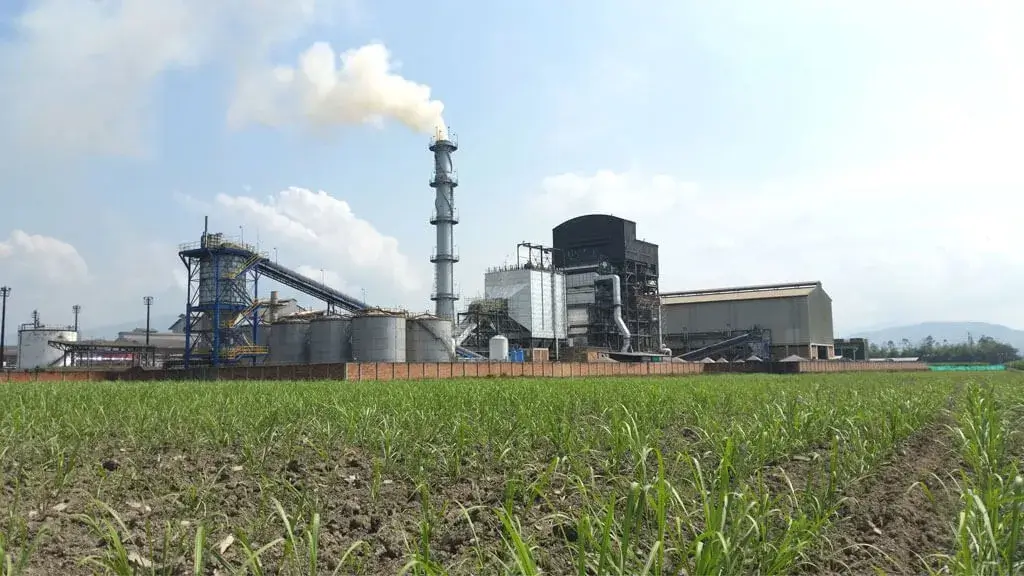
Image taken from: https://www.ingeniorisaralda.com/es/energia-PG66

PM LEGAL NEWS – JANUARY 2026
International Joint Ventures (2013)